-->

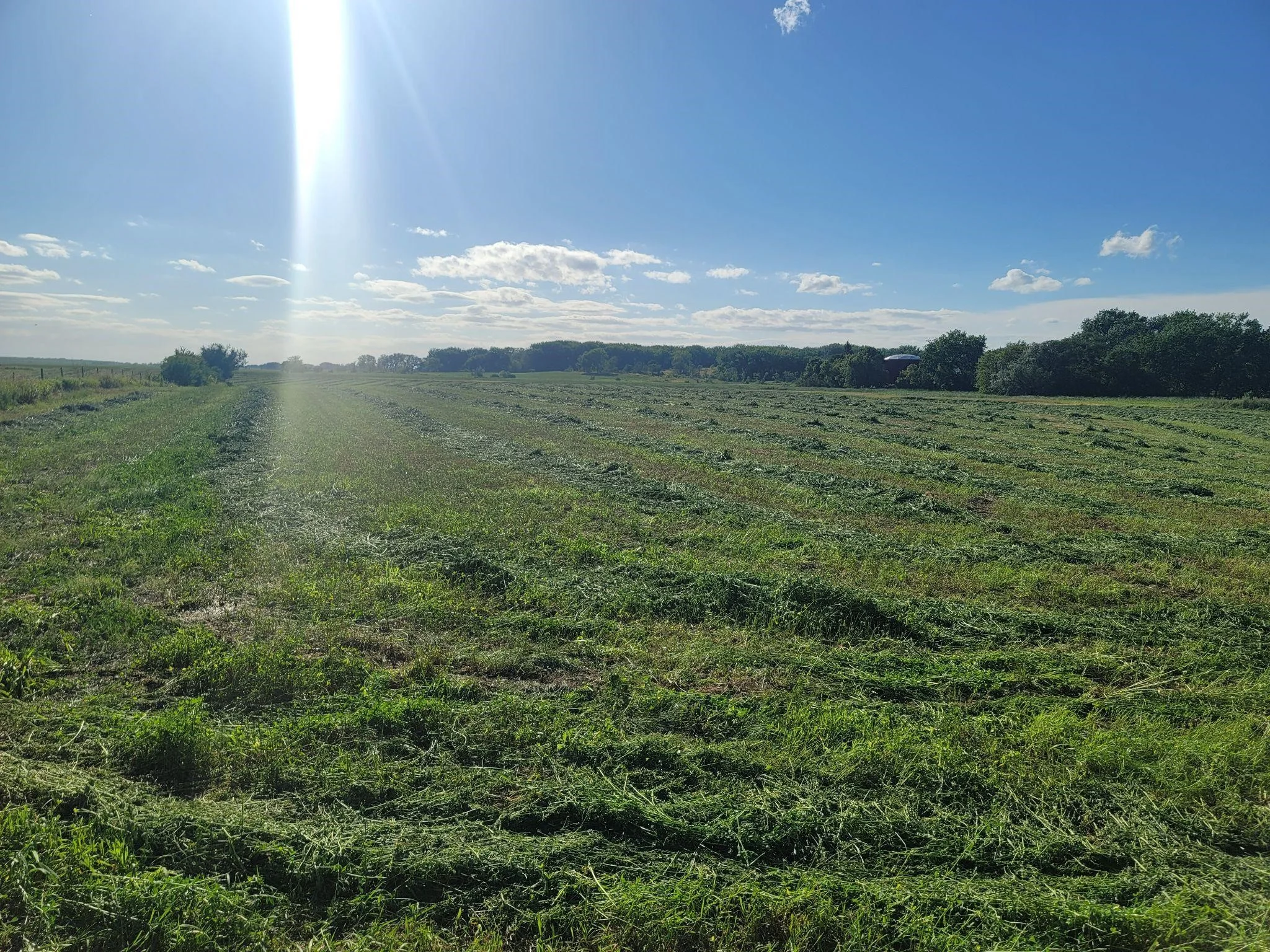
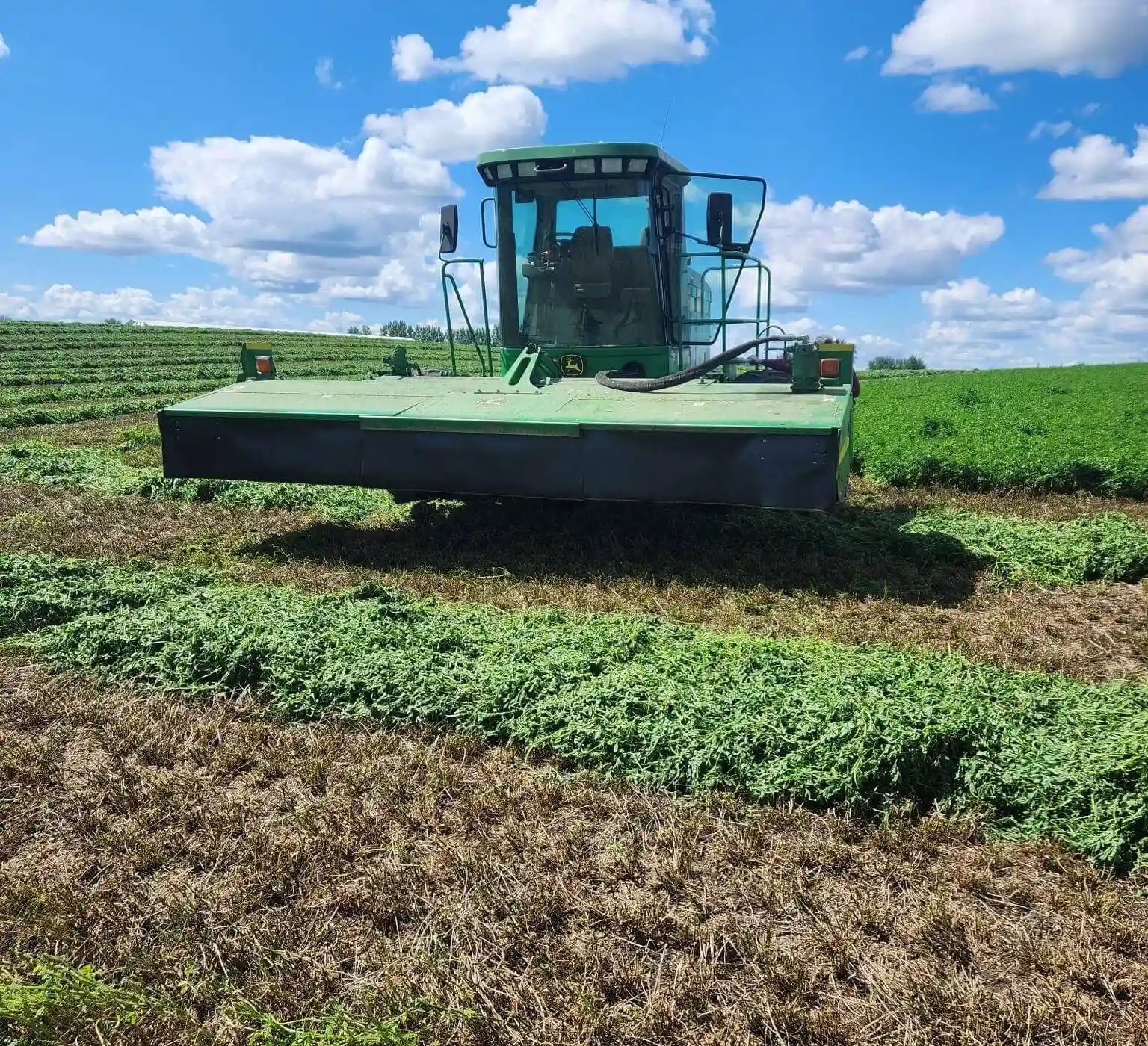
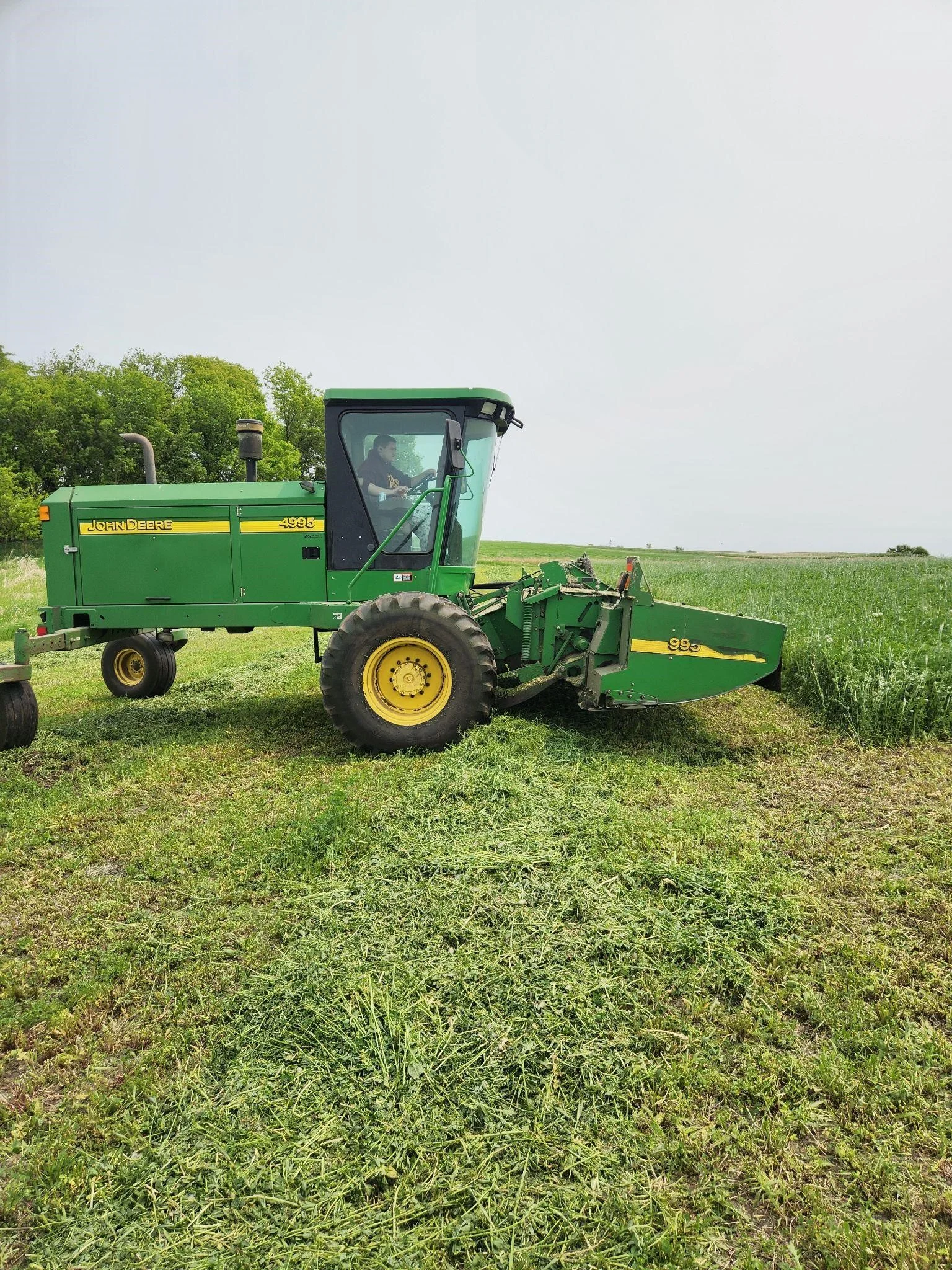
The factory tension chart on your machine is paper. The windrow you just cut is the actual chart.
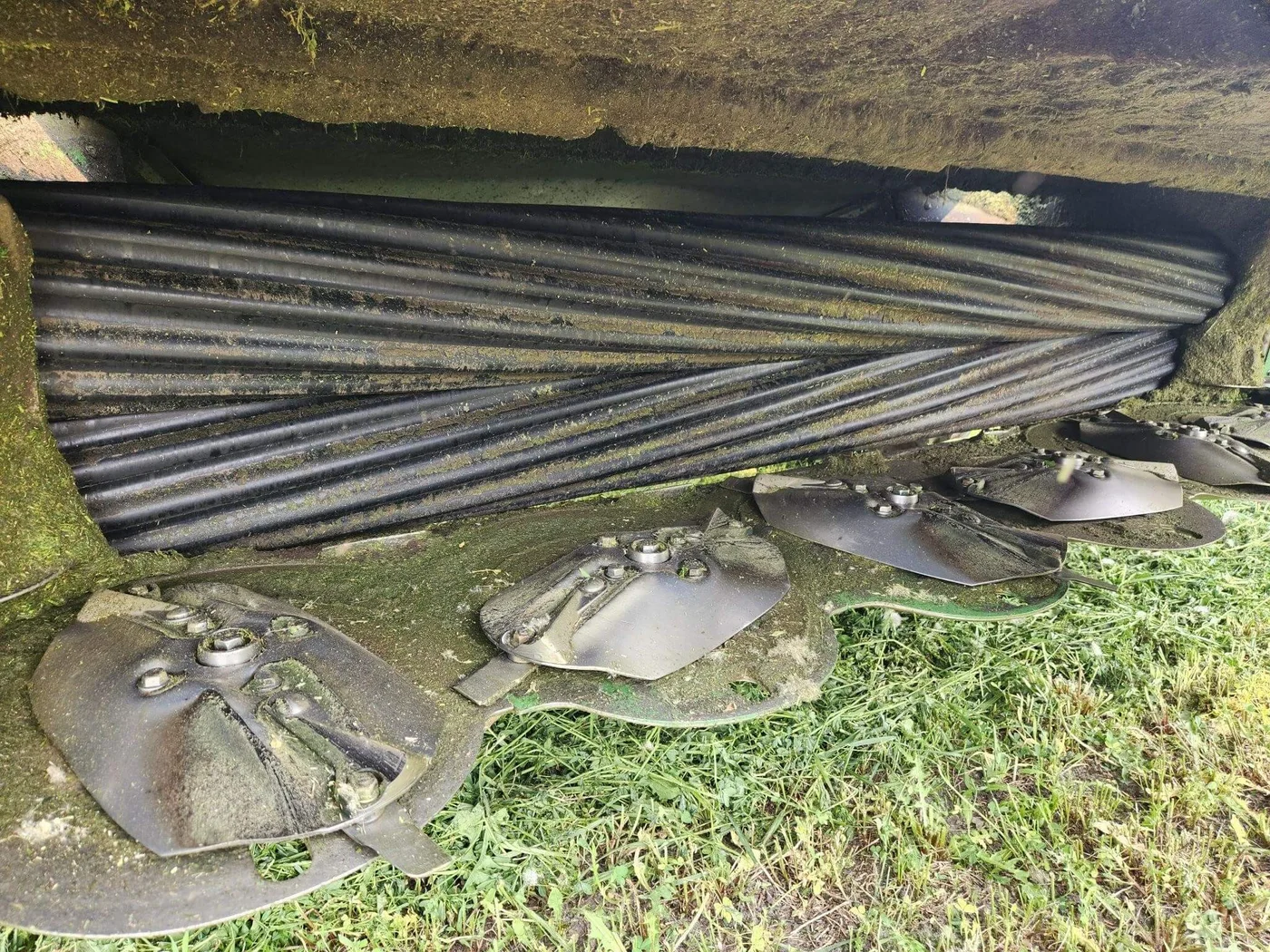
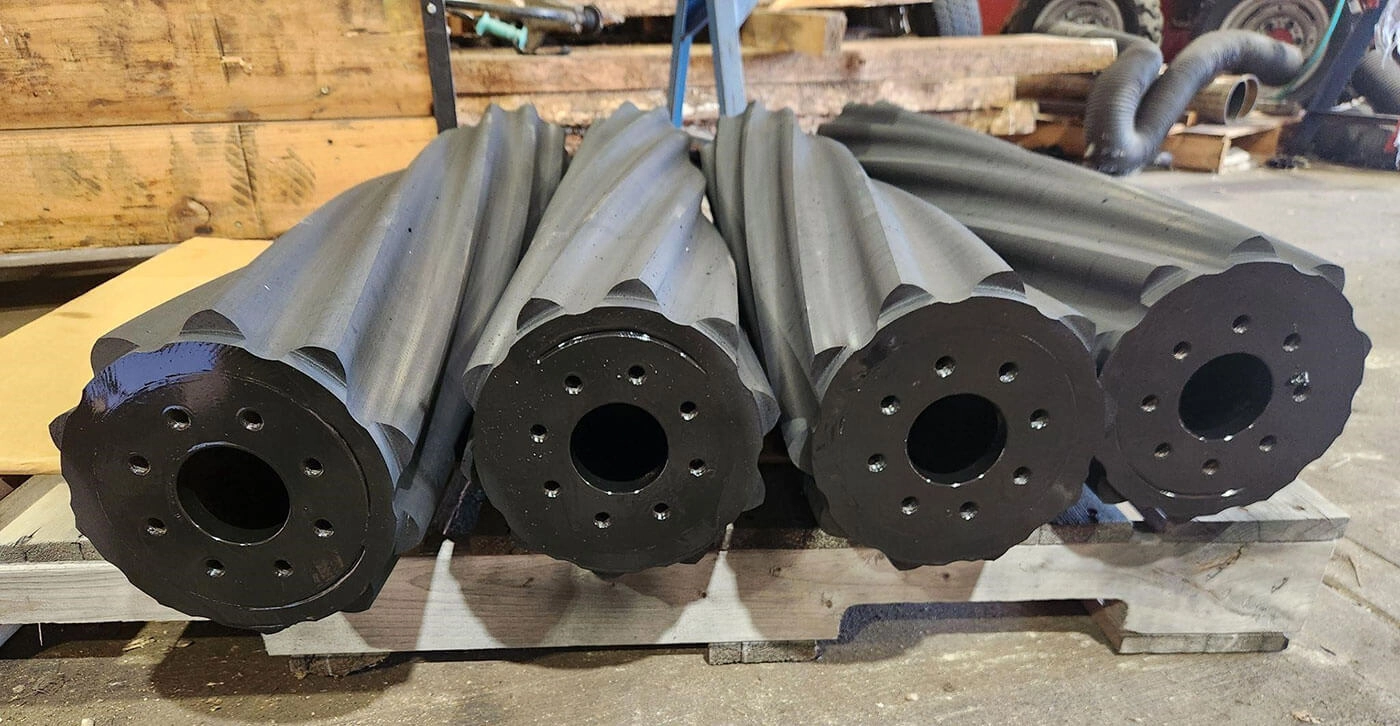
When you replace OEM rollers with continuous-compression rollers, the geometry of the conditioning gap changes. The contact area changes. The hydraulic load profile changes. The factory chart, written for the OEM design, no longer maps to the new machine’s behavior.
The empirical alternative is straightforward: a 100-yard test run, a stem inspection, and one or two tension adjustments. Most operators dial in a setting they’ll use for the rest of the season inside 30 minutes. Here’s the protocol.
You’ll need a short stretch of crop you can sacrifice as a test — 100 yards is enough — the tension control set to roughly 50–66% of maximum, a pair of leather gloves, and five minutes after each pass to inspect.
If your machine has a hydraulic tension gauge, note the starting reading. If it has a spring-tension dial, note the click position. You’re going to need to come back to this baseline.
Set the tension to your starting value. Lower the cutterbar. Cut and condition 100 yards at normal field operating speed.
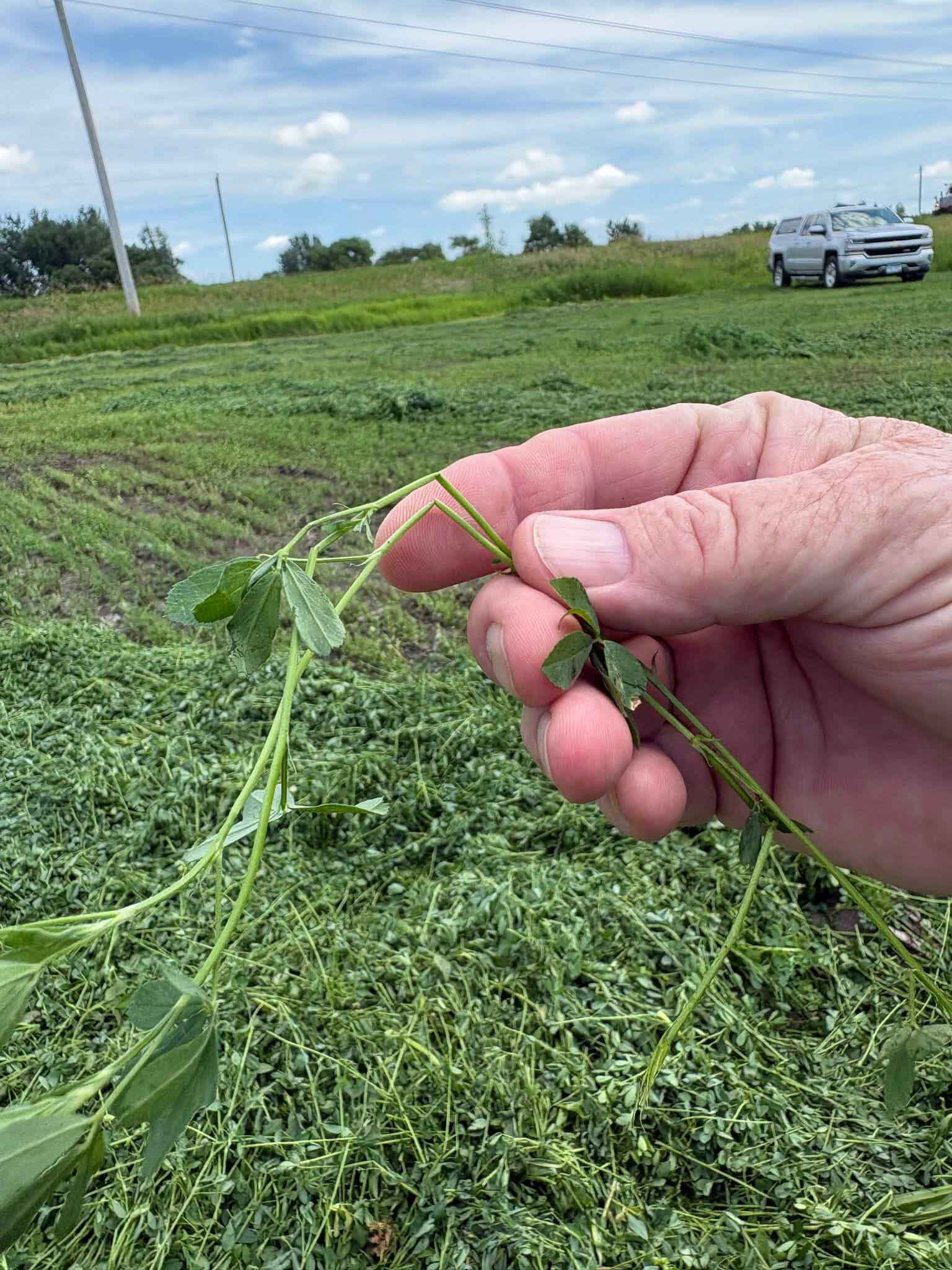
Stop. Pull six to eight stems out of the windrow at random points along the run — front, middle, and back. Don’t grab from the same handful; spread out.
Look at each stem along its full length.
You’re checking for one thing: whether the stem has been crushed continuously, end to end, or only in patches.
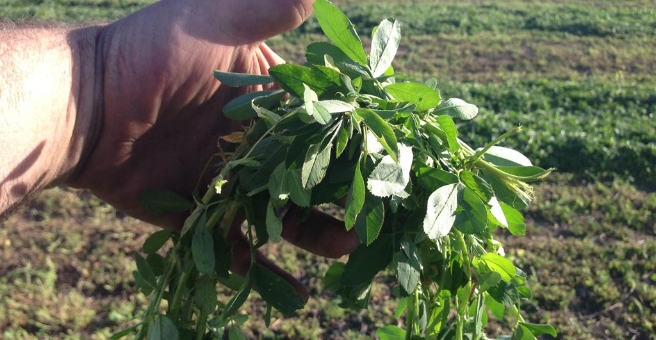
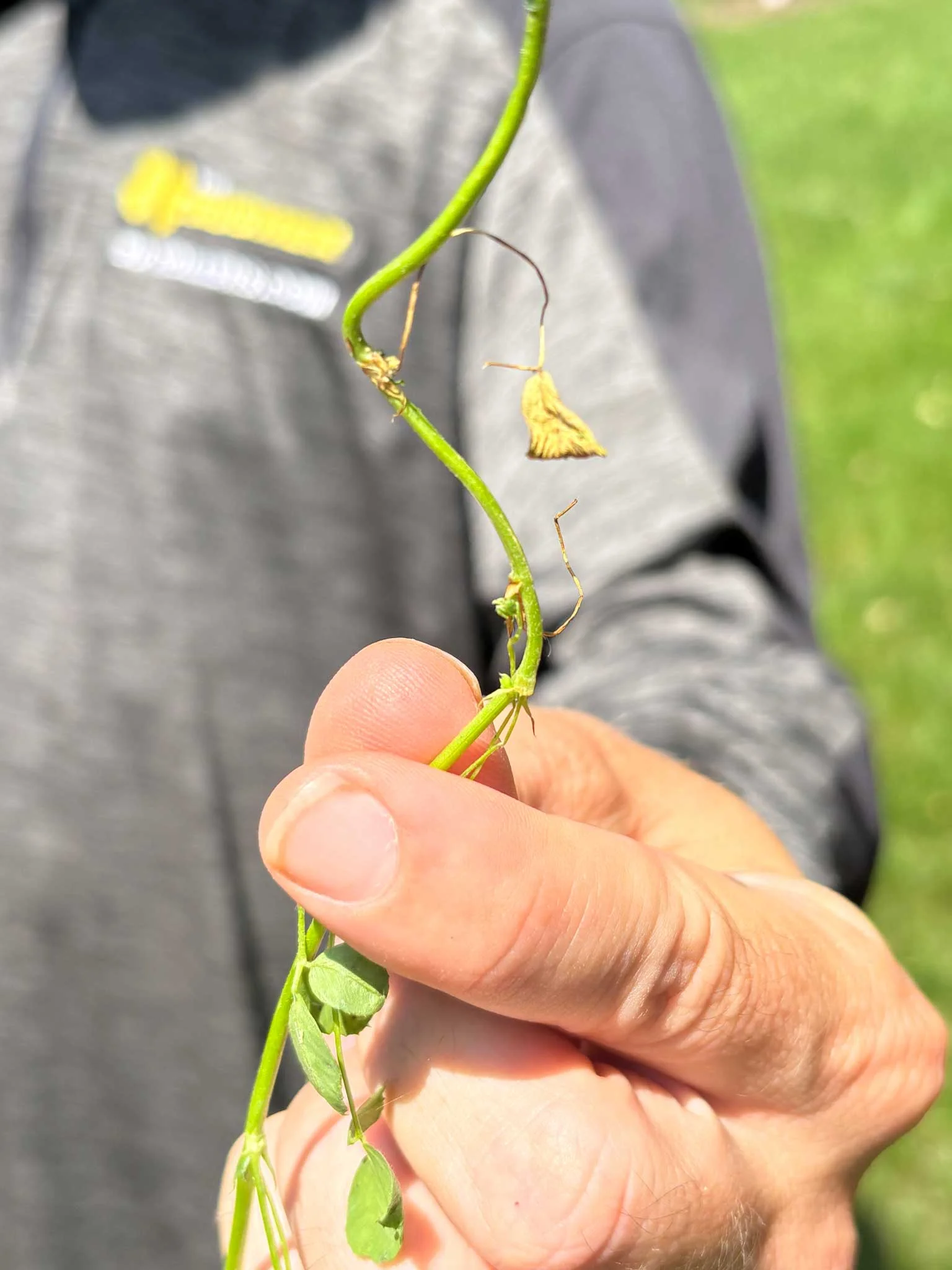
A correctly conditioned stem will be visibly flattened along most of its length. The cuticle will be split open in long stripes that follow the stem. The stem will feel softer and more pliable than the standing crop felt. Leaves will still be attached and intact.
Three failure modes tell you the tension is wrong.
Stems not cracked along their full length. If sections of the stem are still tubular and intact between the crushed portions, the rollers aren’t applying enough pressure. Tension is too low. You’re getting partial crushing — better than crimping, but not what the rollers are designed to do.
Tops cut clean off, or stems shredded. If the stem tops are missing or the crushed portions look pulverized rather than flattened, tension is too high. The rollers are running with more force than the crop needs, which destroys leaves and tops along with the stem.
Leaves bruised, brown, or visibly damaged. Leaves should look like leaves — green, intact, slightly compressed. If they’re crushed flat, discolored, or breaking off easily when you handle the stem, tension is too high. Back it off.
The middle case — stems crushed along their full length, leaves intact and green, no visible top damage , slight bruising is ok— is the setting you’re looking for.
If stems are under-crushed, increase tension by a small but noticeable amount — about one or two clicks on a spring system, or 10–15% on a hydraulic gauge. Run another 100 yards. Re-inspect.
If leaves or tops are damaged, decrease tension by the same amount. Run another 100 yards. Re-inspect.
Most operators find the right setting within two or three iterations. If you’ve adjusted three times and the windrow still doesn’t look right, check the install — particularly whether the OEM stops or shims have been removed. Tension settings can’t compensate for rollers that aren’t allowed to fully close.
Once you have a tension that produces fully crushed stems with intact leaves, write the setting down. Tape the number to the inside of the cab. That’s your reference for this machine and your typical crop conditions.
You will not need to repeat this whole protocol every cutting. The test exists to translate the rollers from manufacturer spec to your specific machine. Once translated, the setting holds — within reasonable variation in crop conditions.
Three variables can pull the right setting up or down from your locked-in baseline.
Crop maturity. A heavier, more mature crop has thicker stems that need more tension to fully crush. If you’re cutting at full bloom or later, expect to add 5–10% to your locked-in setting.
Crop type. Tall fescue, mixed grass-legume stands, and oaten hay respond differently to tension than pure alfalfa. Run a fresh 100-yard test the first time you cut an unfamiliar mix.
Humidity and crop moisture. A wetter, heavier windrow generates more friction through the rollers and may run effectively tighter than the same crop in dry conditions. The locked-in setting is correct for typical conditions; a soaking-wet crop after a heavy dew may benefit from backing off slightly to reduce wear.
The chart told you what tension to set when the manufacturer designed the machine. The windrow tells you what tension is actually needed for the rollers you have, the crop you’re cutting, and the conditions you’re cutting in.
The chart is paper. The windrow is the chart.
How often do I need to redo the 100-yard field test?
Once per machine, plus any time conditions change meaningfully. The test translates the rollers to your specific machine — after that, your locked-in setting holds season to season. Re-run it when you cut an unfamiliar crop mix, move the rollers to a different machine, or install a fresh set.
Can I skip the test and just use the tension setting my neighbor runs?
You can use it as a starting point, but not as your answer. Machine wear, crop mix, cutting height, and ground speed all shift where the right setting lands. Two identical machines in adjacent fields can dial in differently. The windrow on your ground is the only chart that counts.
What if I can’t get a good result at any tension setting?
If three adjustments haven’t produced fully crushed stems with intact leaves, the problem is almost always the install, not the tension — most commonly OEM stops or shims left in place that prevent the rollers from fully closing. Check the Care and Installation guide, and if it still won’t dial in, contact the team at 320-334-6128.
The Crusher installs on your existing machine with your own tension system — no air bags, no modifications. If you’re ready to see the difference in your windrow, find a dealer near you or contact our team at 320-334-6128 for a fast, free quote.

No matter where you are, there’s a Crusher near you.