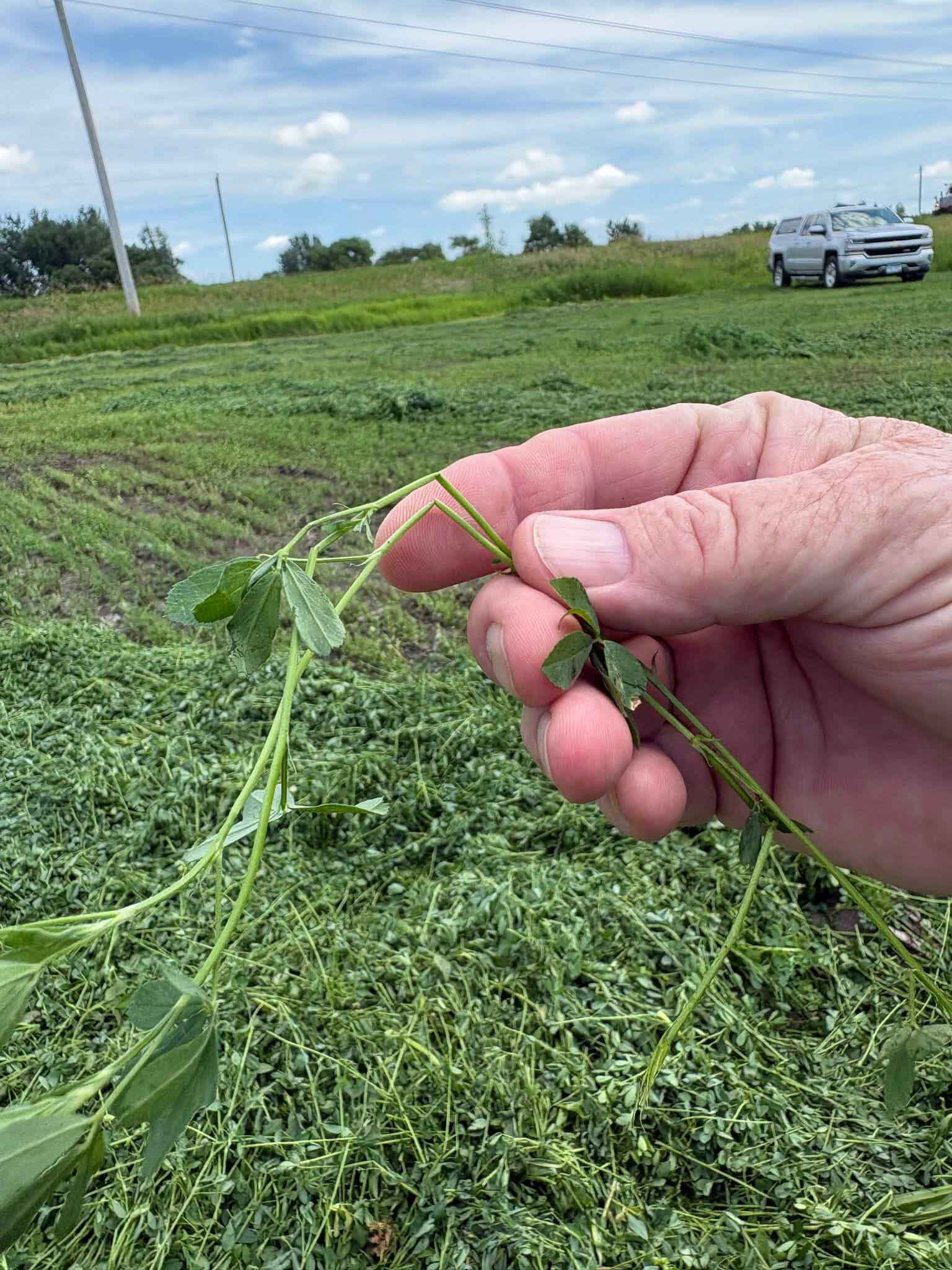
Producers know that leaves dry faster than stems. What they don’t always know is what that set gap in the roller costs them — not just in quality, but in cuttings missed entirely.
Two clocks run after you cut. One is fast, one is slow, and the producer who tries to bale at the right moment for either one loses badly on the other.
The asymmetric drying clock is the second compression of your actual harvest window — layered on top of the forecast compression, and just as decisive.
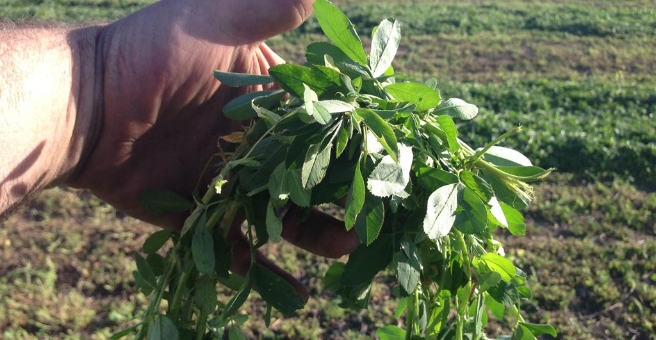
The leaf is a thin, high-surface-area structure with stomata — the open pores designed to exchange gas with the atmosphere. As soon as it’s cut, water leaves the leaf fast: through the stomata for the first hour or two, and through the cuticle and edges after that. A leaf can drop from 70% moisture to single digits in a matter of hours under good drying conditions.
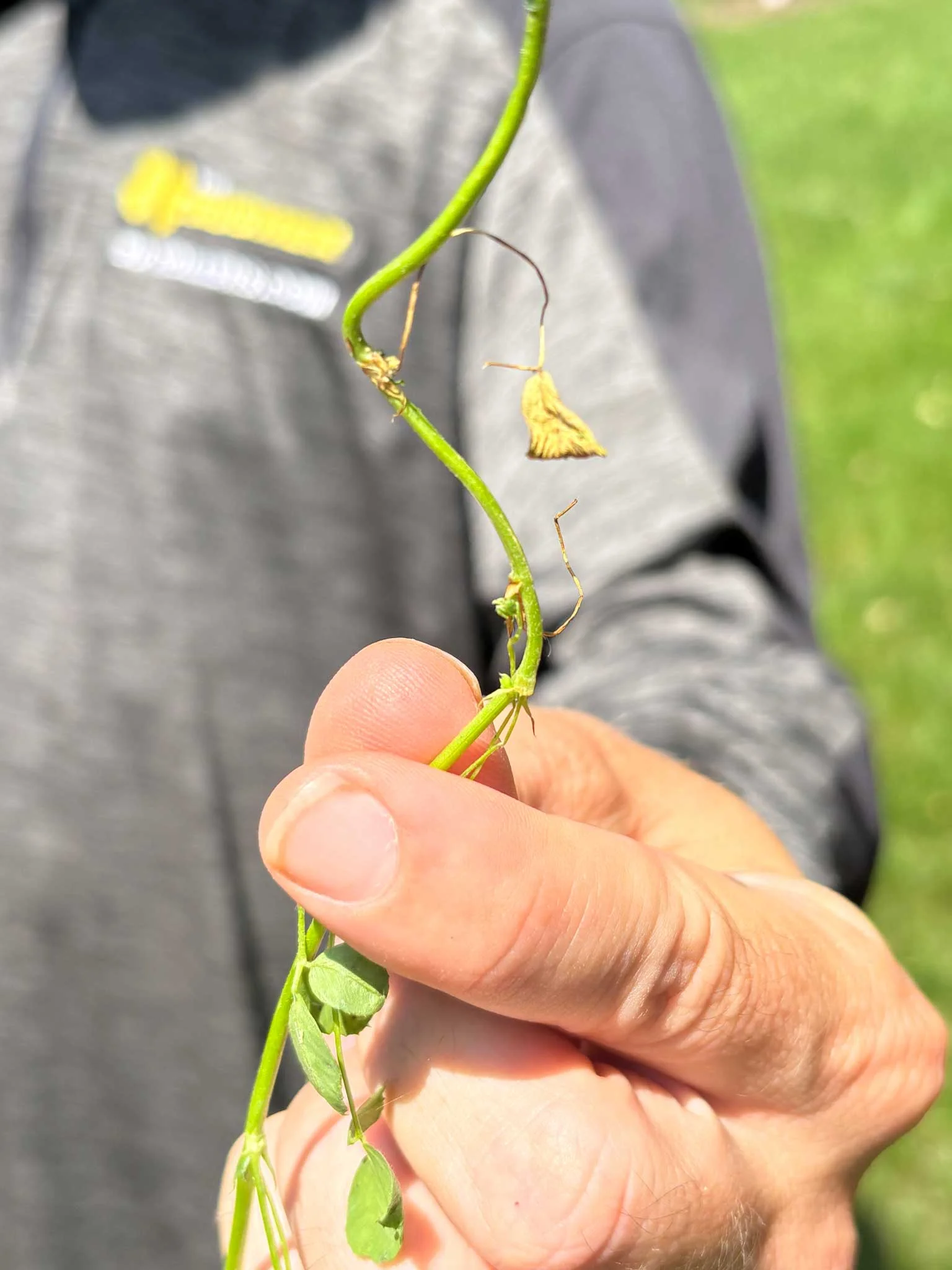
The stem is a different organism entirely. It has a thick cuticle. It has structural cells designed to transport and retain water. When it’s cut, the plant’s defenses are still in place, and the stem holds water for hours — sometimes a full day longer than the leaves.
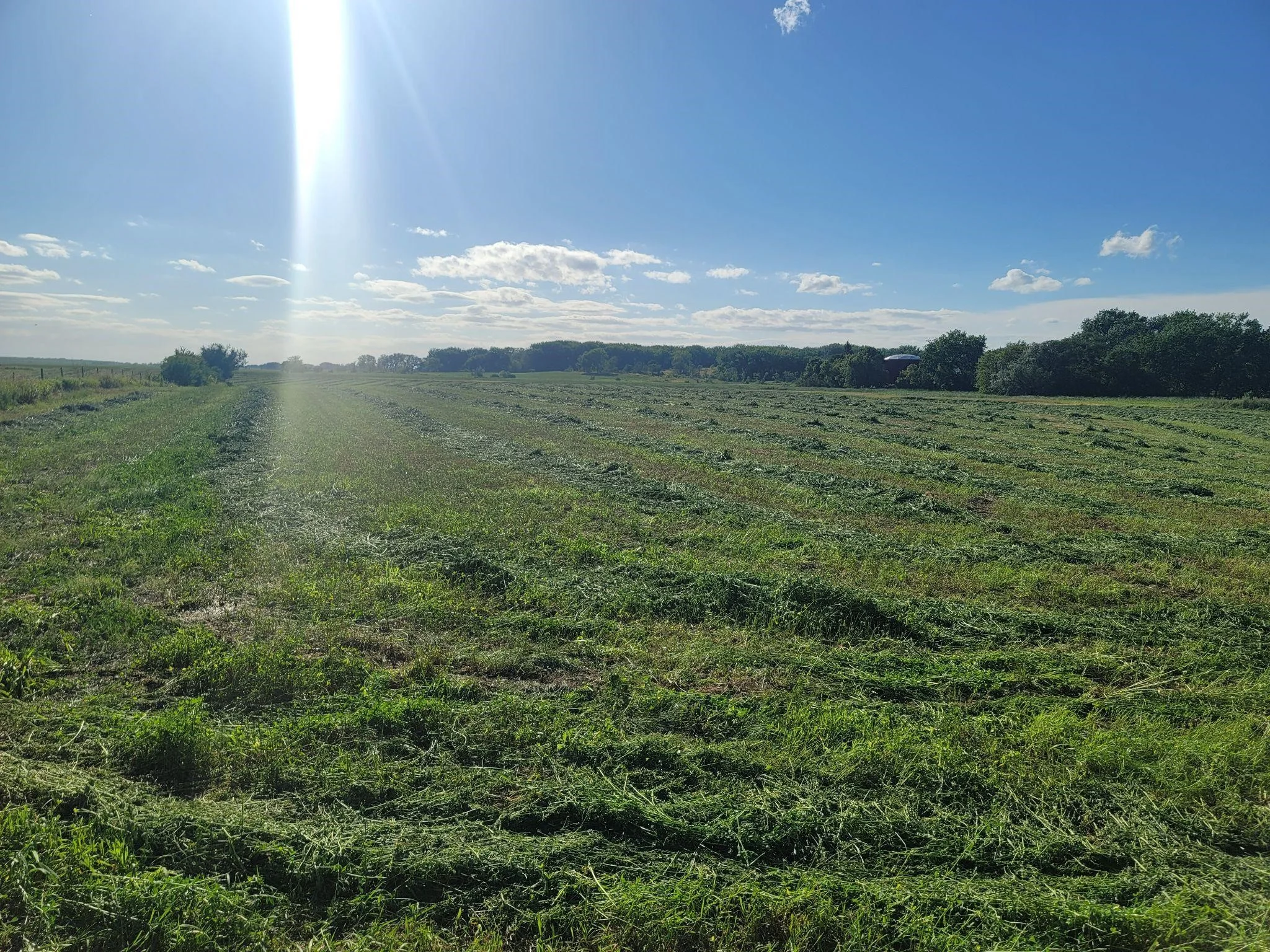
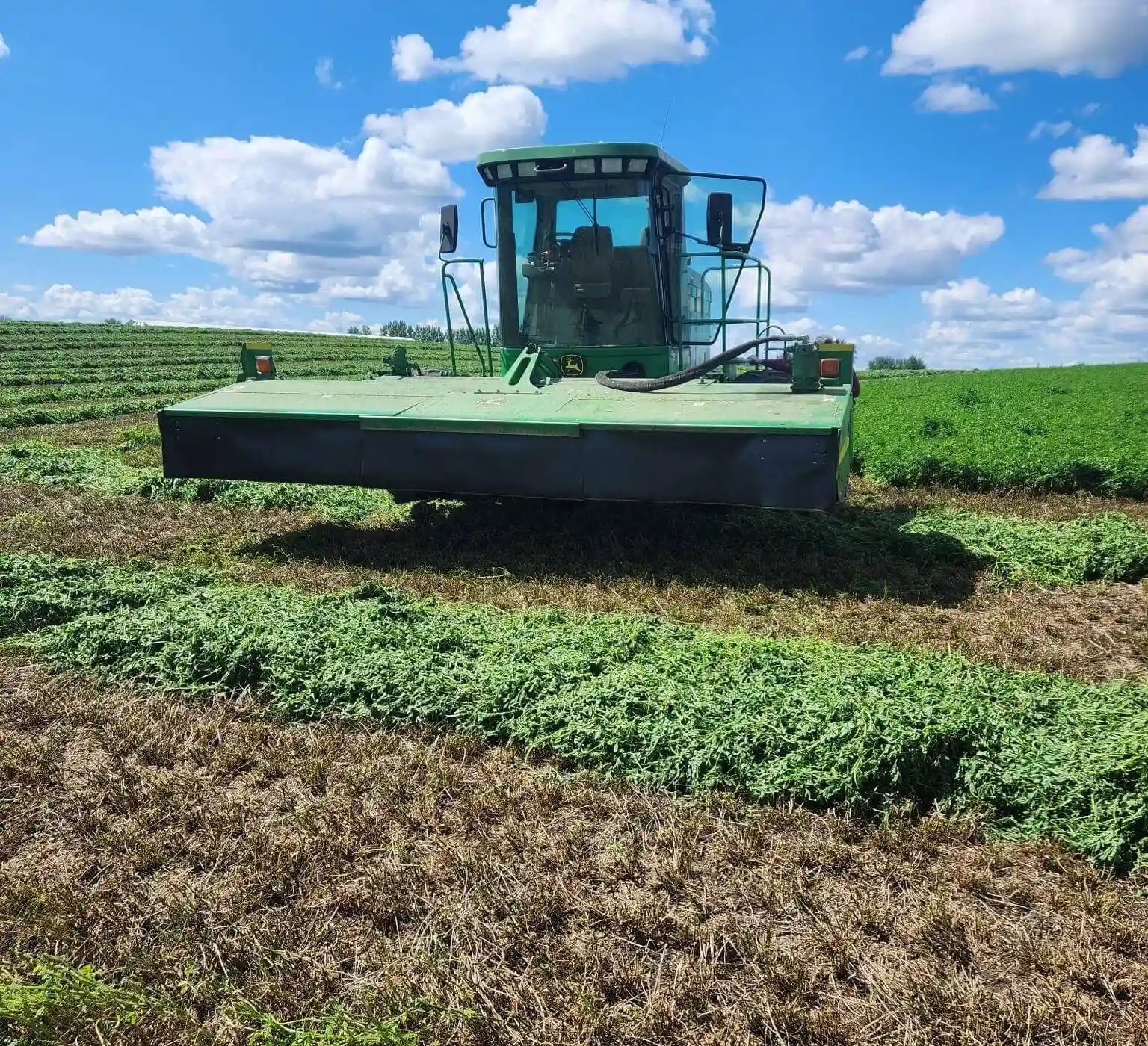
So when the windrow is on the ground, two things are happening at once. The leaves are racing toward dryness. The stems are walking.
This is the squeeze.
Bale at the moisture that’s safe for stems, and the leaves are dust. Bale at the moisture that’s safe for leaves, and the stems mold in storage.
Specifically: stems need to be at 15–18% moisture to bale safely. At that point, leaves are typically at 6–8%. At 6–8%, leaves don’t bend, they snap. Every pass after that: tedder, rake, baler pickup knocks leaves off the stem and leaves them on the ground.
The producer has a choice. Bale early (stems still at 22%, leaves still pliable) and risk mold in the bale. Or bale late (stems safe, leaves shattered) and accept the lost mass and lost grade.
There’s no in between point that’s optimal for both. The two clocks don’t agree, and the calendar doesn’t help.
The pillar piece argued that your real forecast window is shorter than the 3-day forecast suggests. The asymmetric drying clock is the second compression on top of that. Even within your honest forecast window, you can’t use the whole thing — your maneuvering room is bounded by when stems become safely dry, not by when the rain arrives.
Run the math.
If your forecast is honest for 48 hours and your stems take 36 hours to reach 18% moisture, your buffer for getting the hay off the field is 12 hours. But by the 36-hour mark, your leaves have been on the ground long enough to over-dry — so you’ve lost grade by the time the stems are ready.
If your forecast is the same 48 hours and your stems take 30 hours, your buffer expands to 18 hours and your leaves are still pliable. Same forecast. Different cutting.
The variable that swings the math isn’t the forecast. It’s how fast the stems dry.
The stem-drying clock isn’t fixed. It’s set by the conditioning step.
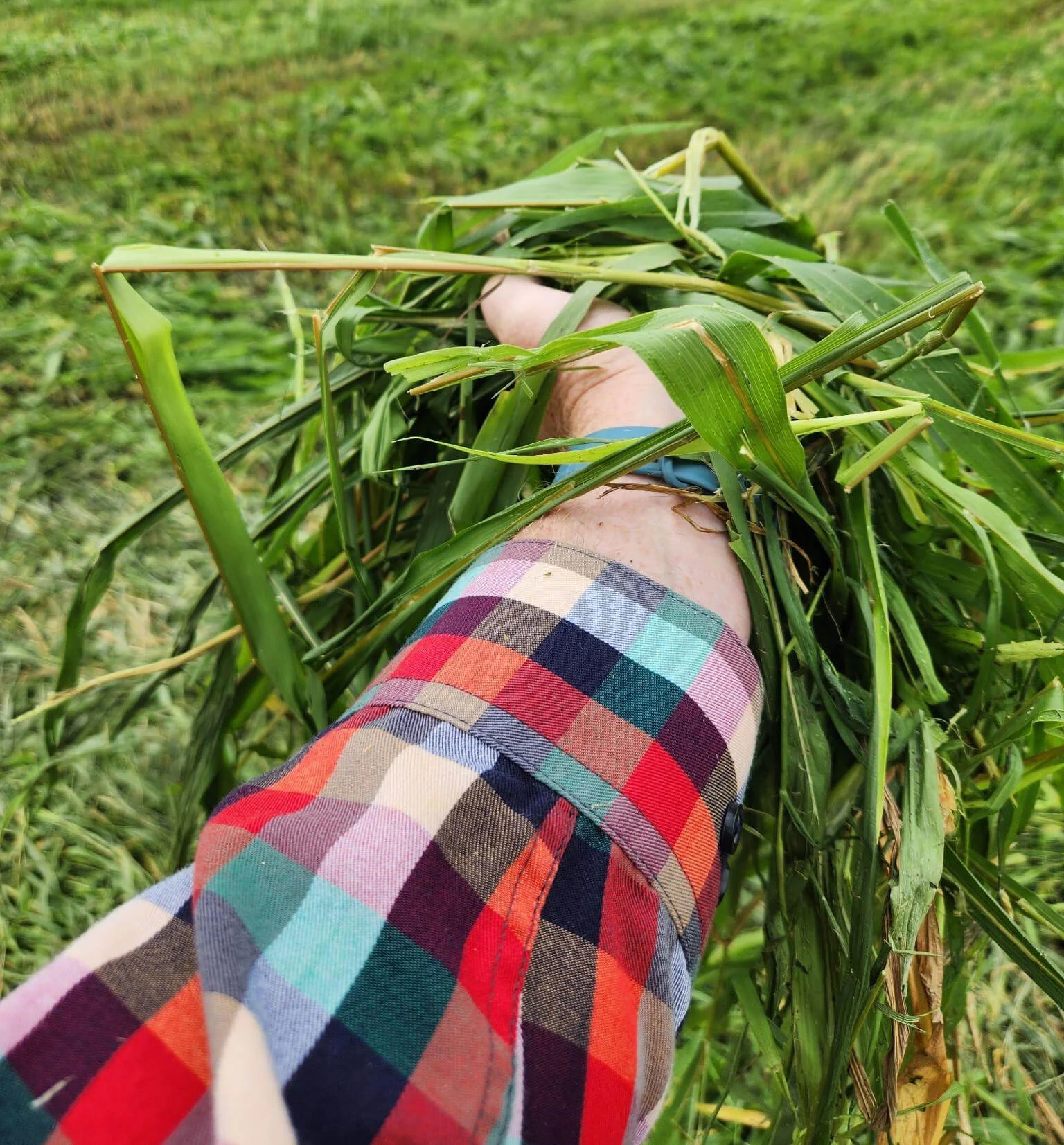
Standard intermeshing rollers crimp the stem at 3–4 inch intervals. Moisture exists at the bend points, but the sections between stay tubular and slow. The stem clock runs at whatever pace those crimped intervals allow — typically 12–24 hours longer than the leaf clock.
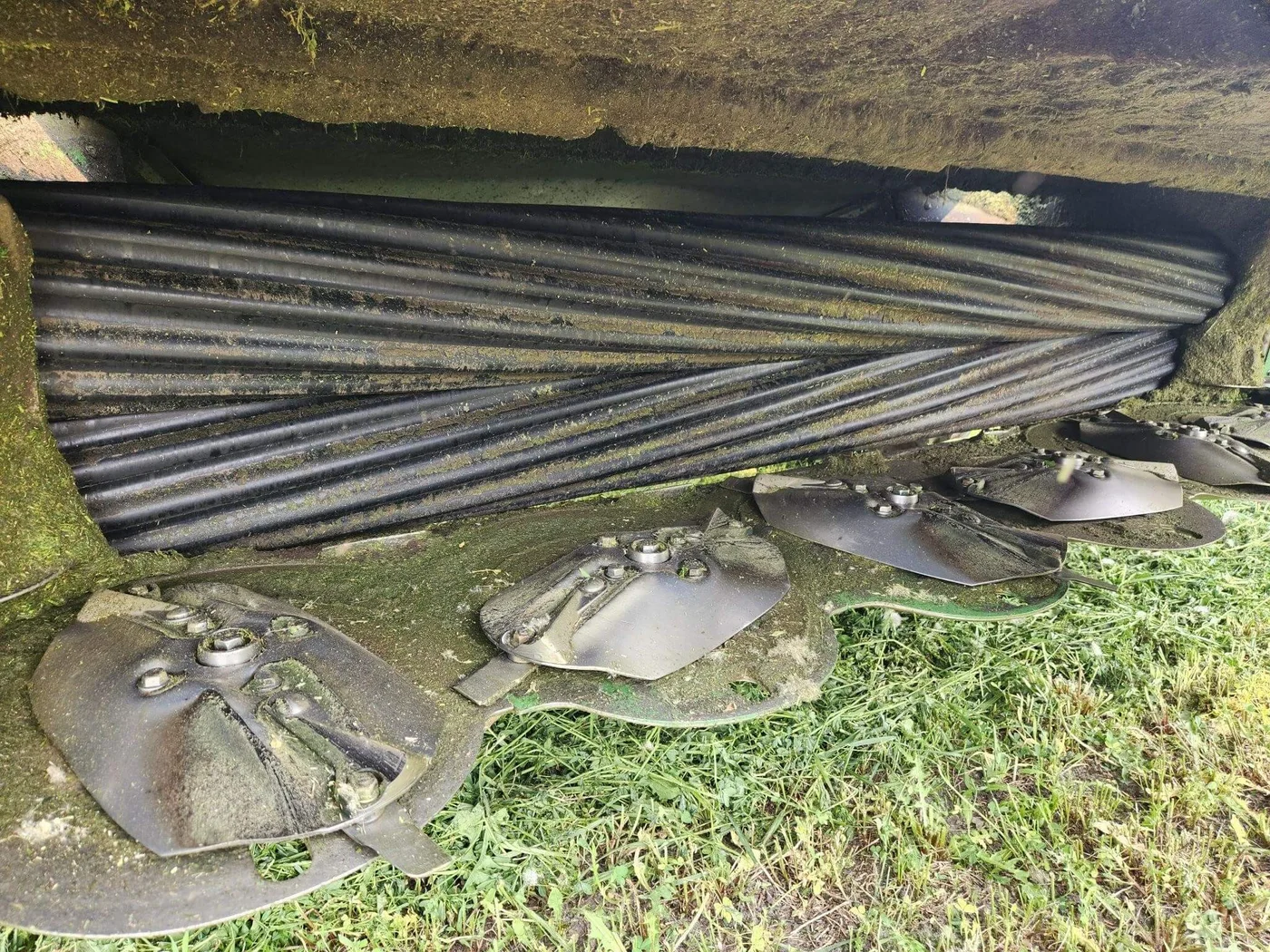
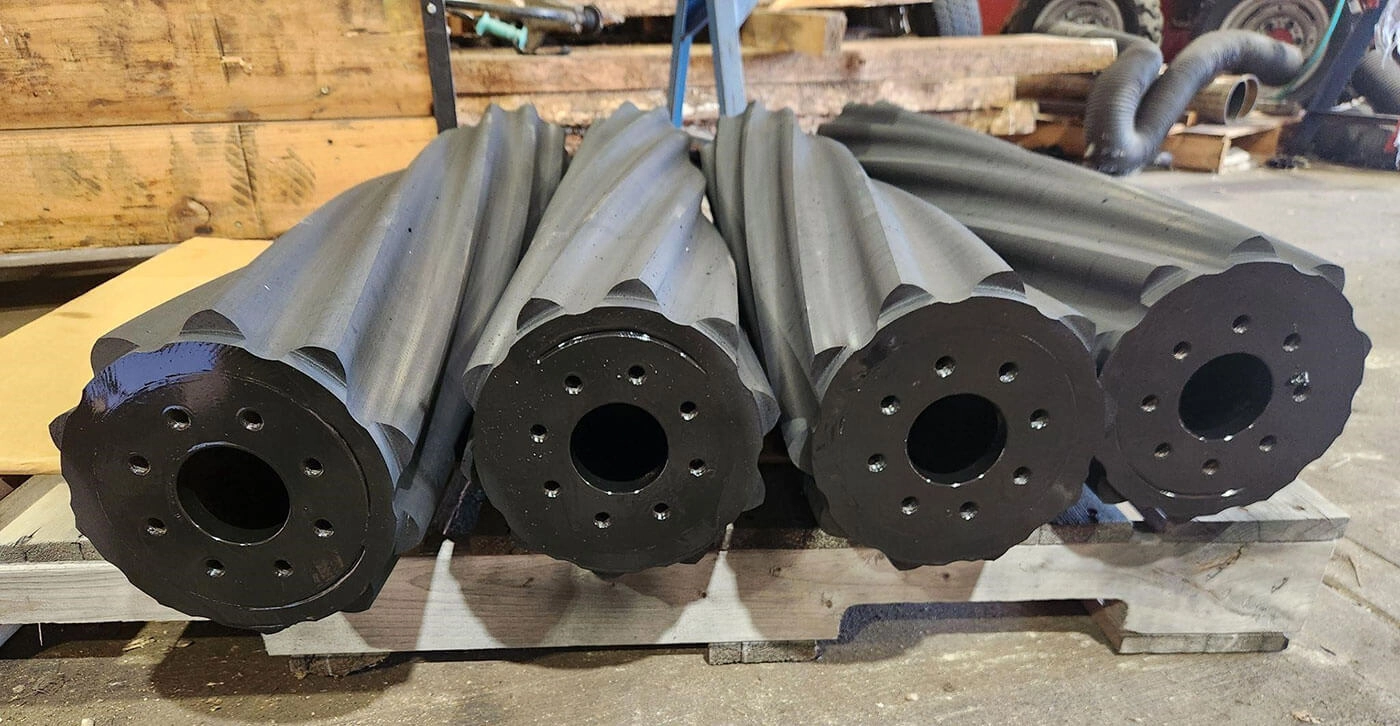
Continuous-compression rollers flatten the stem along its full length. The cuticle ruptures continuously. Surface area for evaporation increases by orders of magnitude. Stem dry-down accelerates until it’s running close to the leaf rate. The two clocks start to converge.
When they converge, the squeeze opens up. Bale time arrives with stems at safe moisture and leaves still pliable. The window you can actually use grows back toward the window the forecast actually gave you.
The conditioner upgrade isn’t really a hay-quality decision. It’s a window decision.
You’re not buying drier stems. You’re buying back the maneuvering room the asymmetric drying clock takes away. You’re buying the right to use the forecast you have. You’re buying cuttings you’d otherwise have to skip.
The forecast lies. The plant lies. Both lie in different ways. The forecast lies about what window you have. The plant lies about whether you can use it.
A continuous-compression NO-GAP conditioner roll doesn’t fix the forecast. It fixes the plant. This roller option will no doubtingly condition your stem to a softer more palatable condition and animals will love you for it!!
Can’t I just bale earlier and treat the hay with a preservative?
Preservatives like propionic acid buy you a few points of moisture tolerance, but they cost money every cutting, add a handling step, and some buyers — especially horse and export markets — discount treated hay. A preservative manages the symptom of slow stems. Speeding up stem dry-down removes the problem, and it works on every cutting without a per-bale cost.
How much faster do stems actually dry with continuous-compression rollers?
Producers running continuous-crush rollers consistently report baling 12 to 24 hours sooner than they did on standard intermeshing rolls under the same conditions. That’s the stem clock catching up to the leaf clock — and in window terms, it’s the difference between fitting a cutting into a 36-hour forecast and having to skip it.
Won’t crushing the stem that hard damage the leaves too?
Not when the rubber compound is doing its job. The stem is hollow and collapses under continuous compression; the leaf is denser and flatter, so a properly engineered rubber roll yields around it instead of shearing it off. If you’re seeing bruised or broken leaves in your windrow, the tension is set too high or the rubber profile is worn — contact the team at 320-334-6128 and talk through your setup.
The two clock problem is one piece of the dry down equation. These pieces carry the rest:
To talk through the conditioning piece directly, the dealer locator connects you with someone nearby.
The Crusher’s continuous compression, no gap design is built to close the gap between your stem clock and your leaf clock, full length stem crush on your existing machine, using your own tension system, with no modifications. Find a dealer near you or get a fast, free quote at 320-334-6128.

No matter where you are, there’s a Crusher near you.