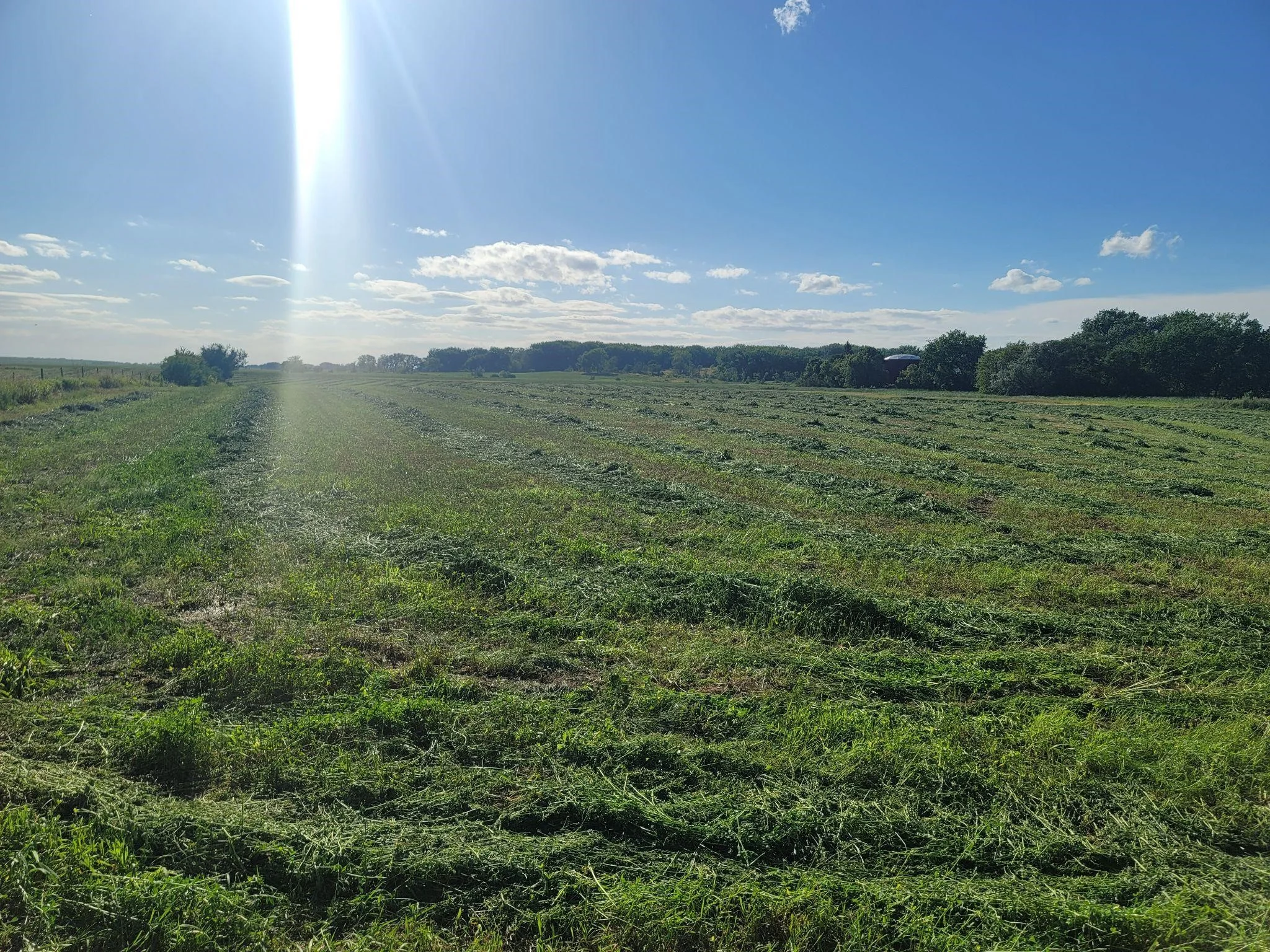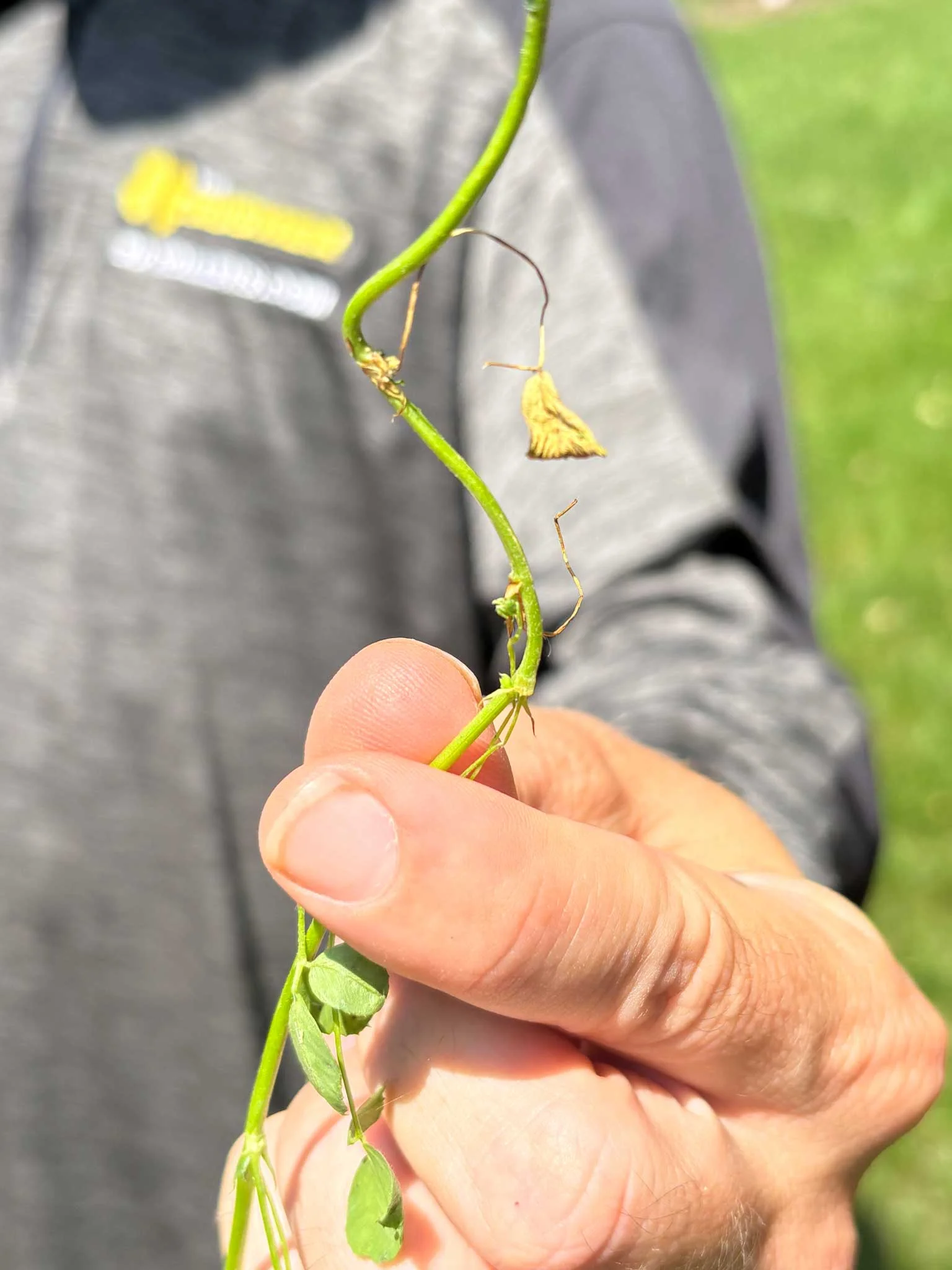
Walk behind your rake on a clear afternoon and look at the ground where the windrow was a minute ago. Those small dry pieces scattered across the stubble, the ones that look like crumbled tea, are leaves. Each one is protein you grew, fertilized, irrigated, and harvested. None of it is going into your bale.
Most operations lose somewhere between 15 and 25 percent of their leaves between cutting and storage and never measure it. That loss does not show up on a yield monitor. It shows up on the hay test report two weeks later, when the RFV comes back lower than the cutting before it, and the buyer offers $40 a ton less than expected.
If Supreme grade is engineered, leaves are where the engineering matters most.
The simplest way to understand why leaf loss is expensive: the leaves carry the value, and the stems carry the volume.
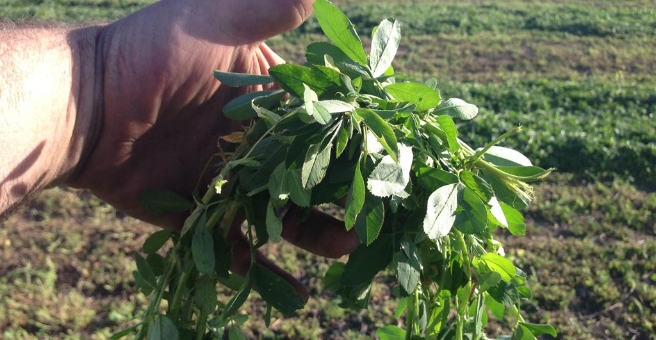
Alfalfa leaves run roughly 26 percent crude protein, sometimes higher in young plants. Stems run closer to 10 percent. Leaves carry the digestible energy buyers pay for. Stems carry the structural fiber that drives ADF and NDF up. Leaves are also where the calcium concentrates, which matters most for dairy cows in early lactation.
When a leaf falls off the plant during raking and ends up on the ground, you don’t just lose mass. You lose the part of the plant that was disproportionately valuable. The leaf-to-stem ratio in the bale is, in effect, the grade. A bale with 50 percent leaves can hit Supreme. A bale with 35 percent leaves, from the same field on the same day, lands in Premium or Good.
Lose 25 percent of your leaves and the math gets brutal. You can be looking at a Premium cutting and baling Fair hay because the value walked out on the rake.
Leaf loss is rarely one big event. It is small losses across multiple steps that compound.
Over-drying. Leaves dry fast and stems dry slow. By the time the stem reaches safe baling moisture (15 to 18 percent), the leaves can be down to 6 or 8 percent. At that moisture, leaves are brittle. Any mechanical contact, including the rake passing over them, shatters them off.
Raking. Each rake pass is leaf attrition. Wheel rakes are gentler than spring-tine rakes for retaining leaves but slower; rotary rakes are fast but punishing on dry leaves. Two rake passes always loses more than one.
Tedding. Tedders fluff the windrow to speed drying. They work, but they also touch every leaf in the swath. Tedding wet hay is forgiving; tedding dry hay shatters leaves fast.
Baler pickup. Anything below about 15 percent leaf moisture, the pickup tines knock leaves off as the windrow lifts. Faster ground speed makes it worse.
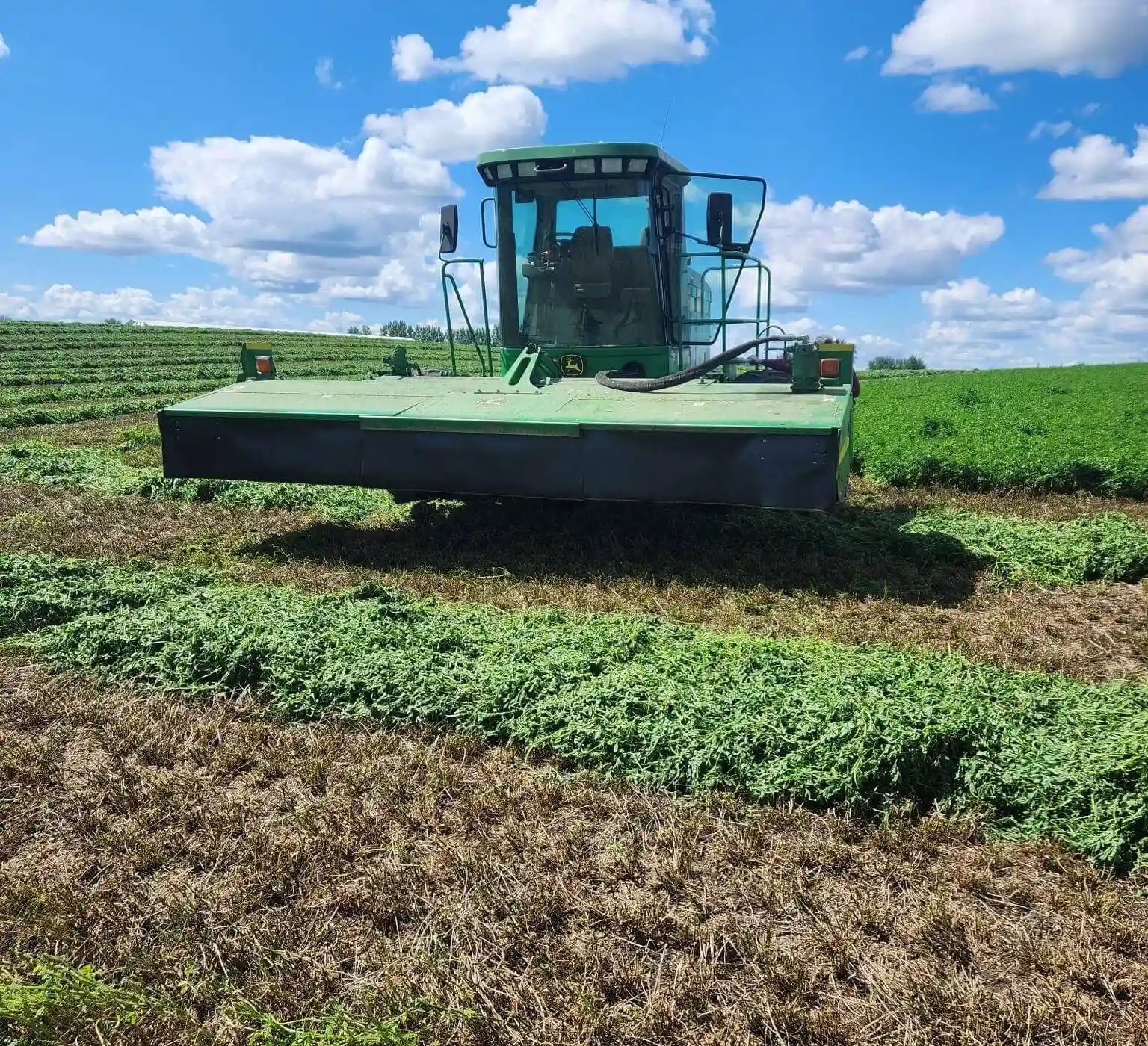
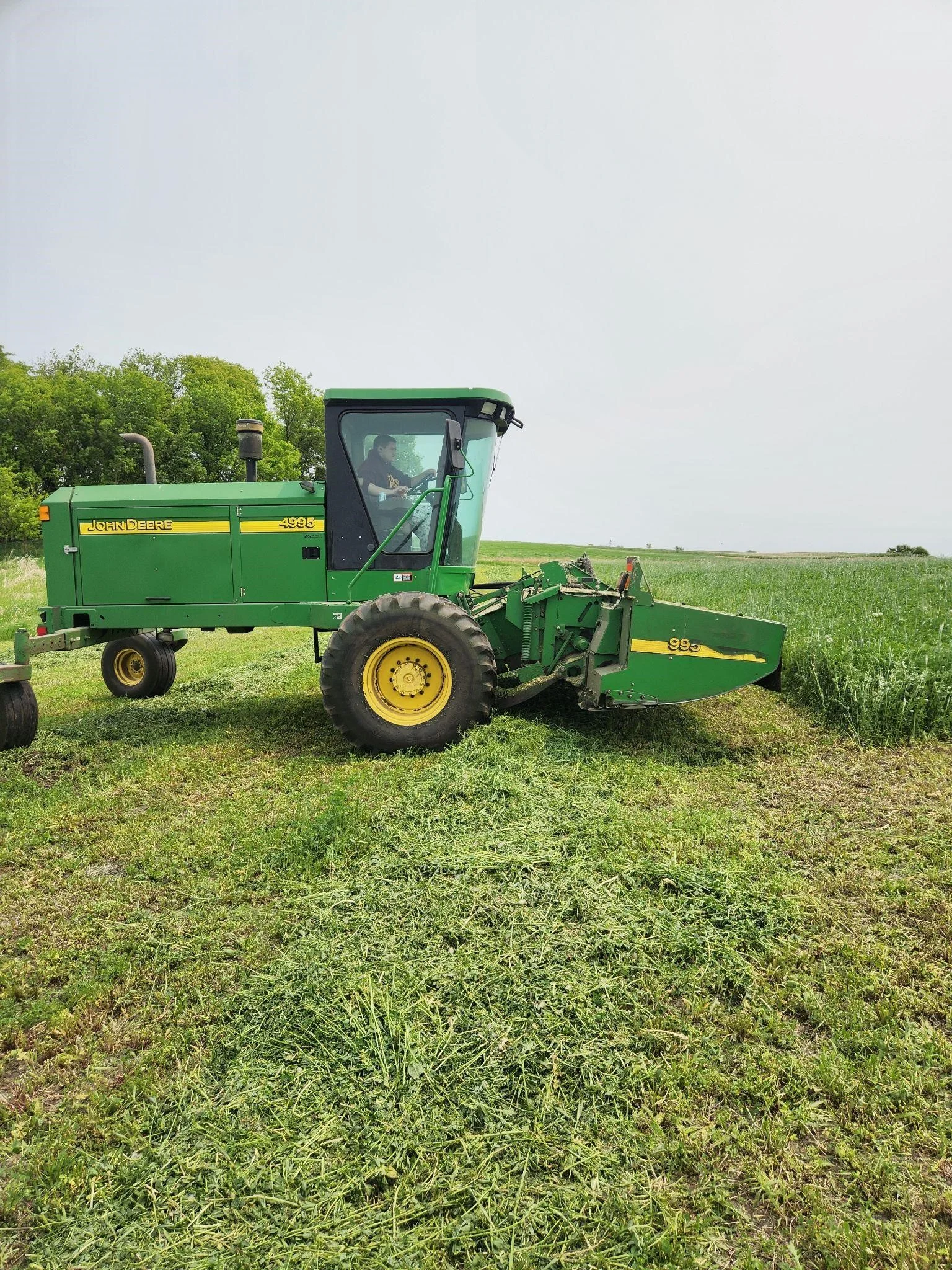
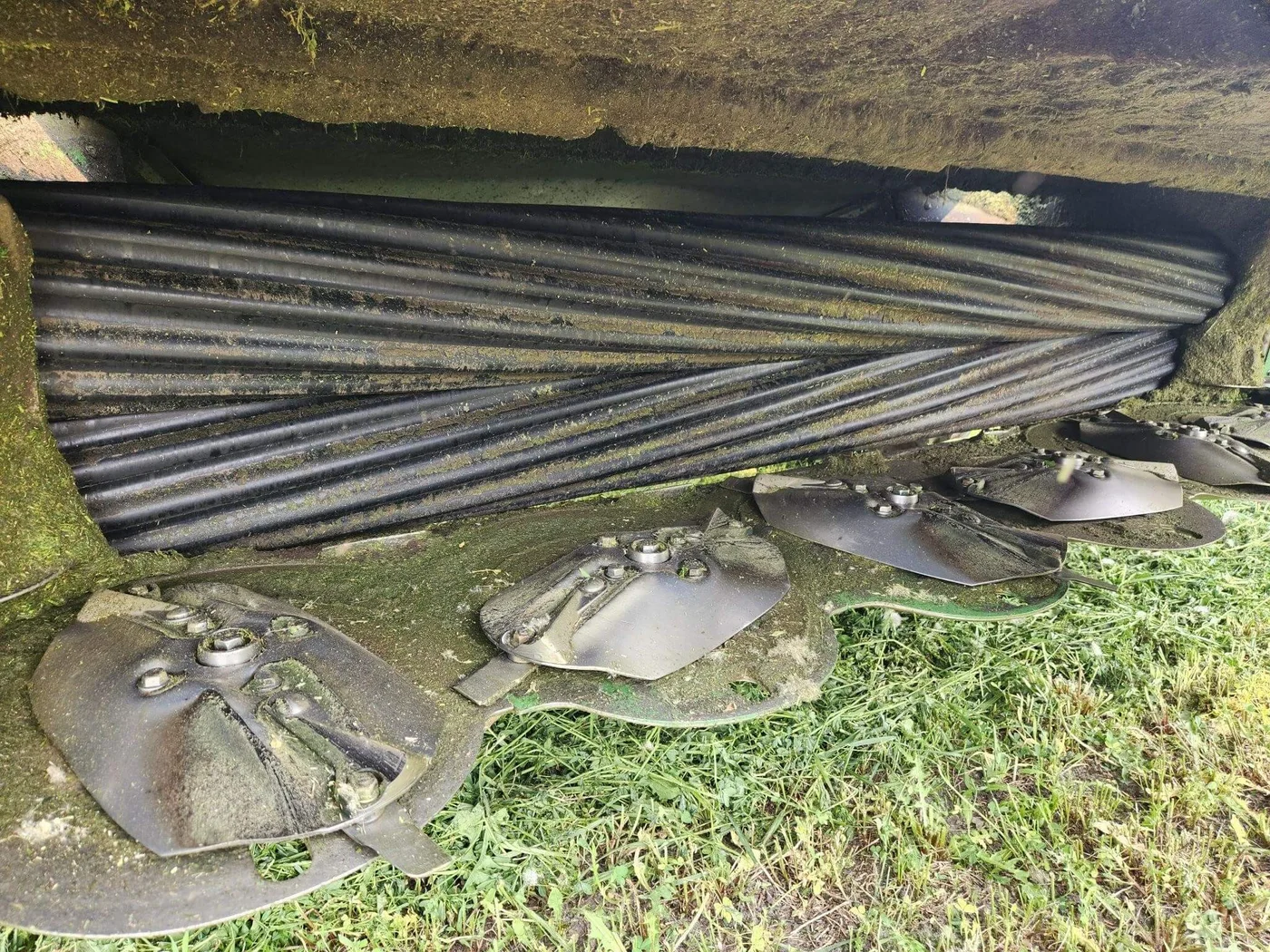
Conditioning method. Conditioning is the first place leaves are at risk, and the first one to fix because it cascades into all the others. Aggressive steel-on-steel rolls and impact-style conditioners (flails, brushes) hit leaves and stems with the same force. Continuous-crush rubber rolls do not.
Most producers think conditioning is inherently rough on leaves. Any conditioning bruises leaves; the choice is just how much to accept. This is a half-truth that costs leaf weight every cutting.
The real choice is not aggressive versus gentle. It is targeted versus indiscriminate.
Indiscriminate conditioning treats the whole plant the same. Steel rolls hit leaves and stems with equal force. Flail conditioners thrash everything in the swath. The leaf takes the same beating as the stem, and the leaf is the part that can’t take it.
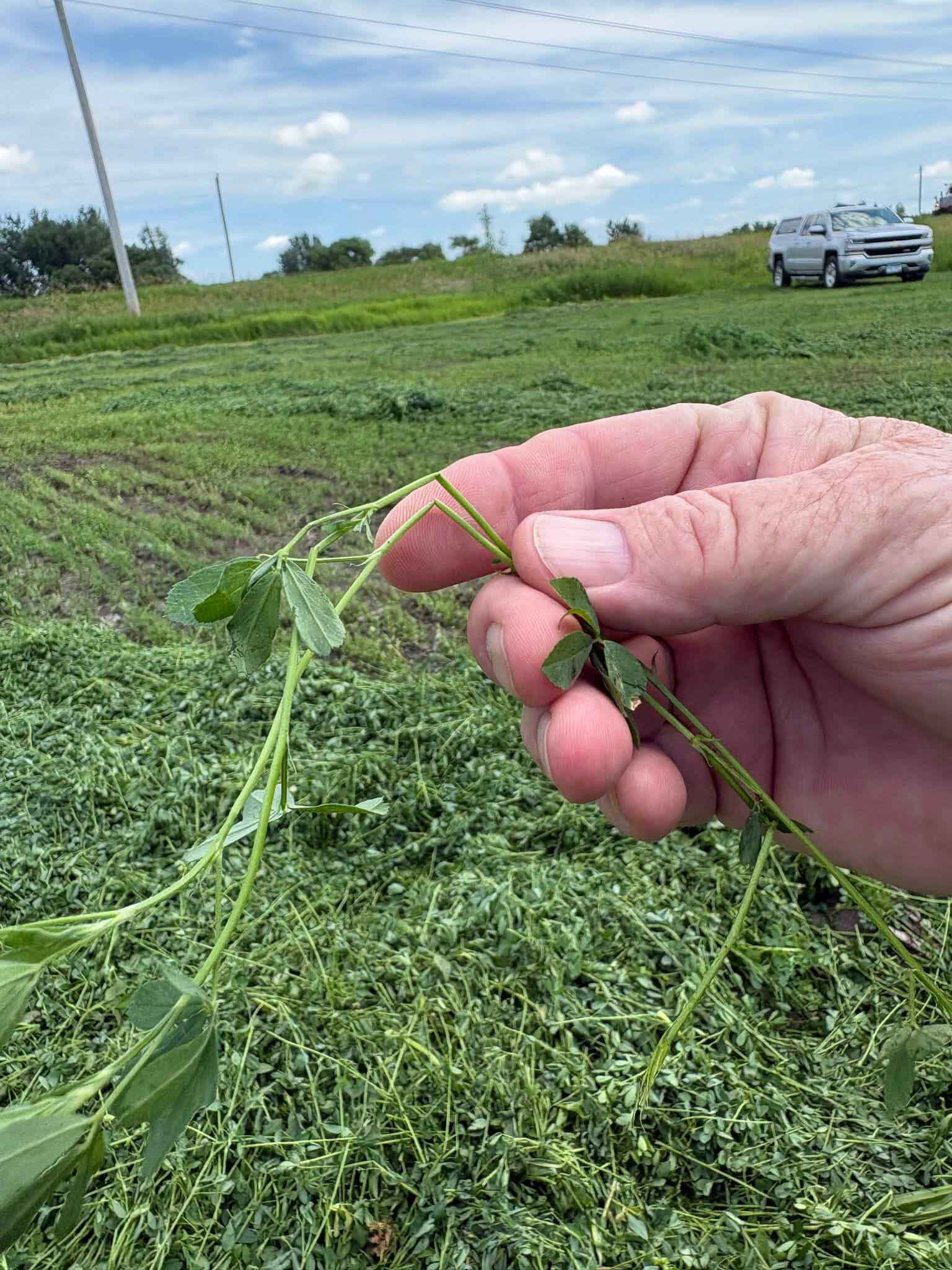
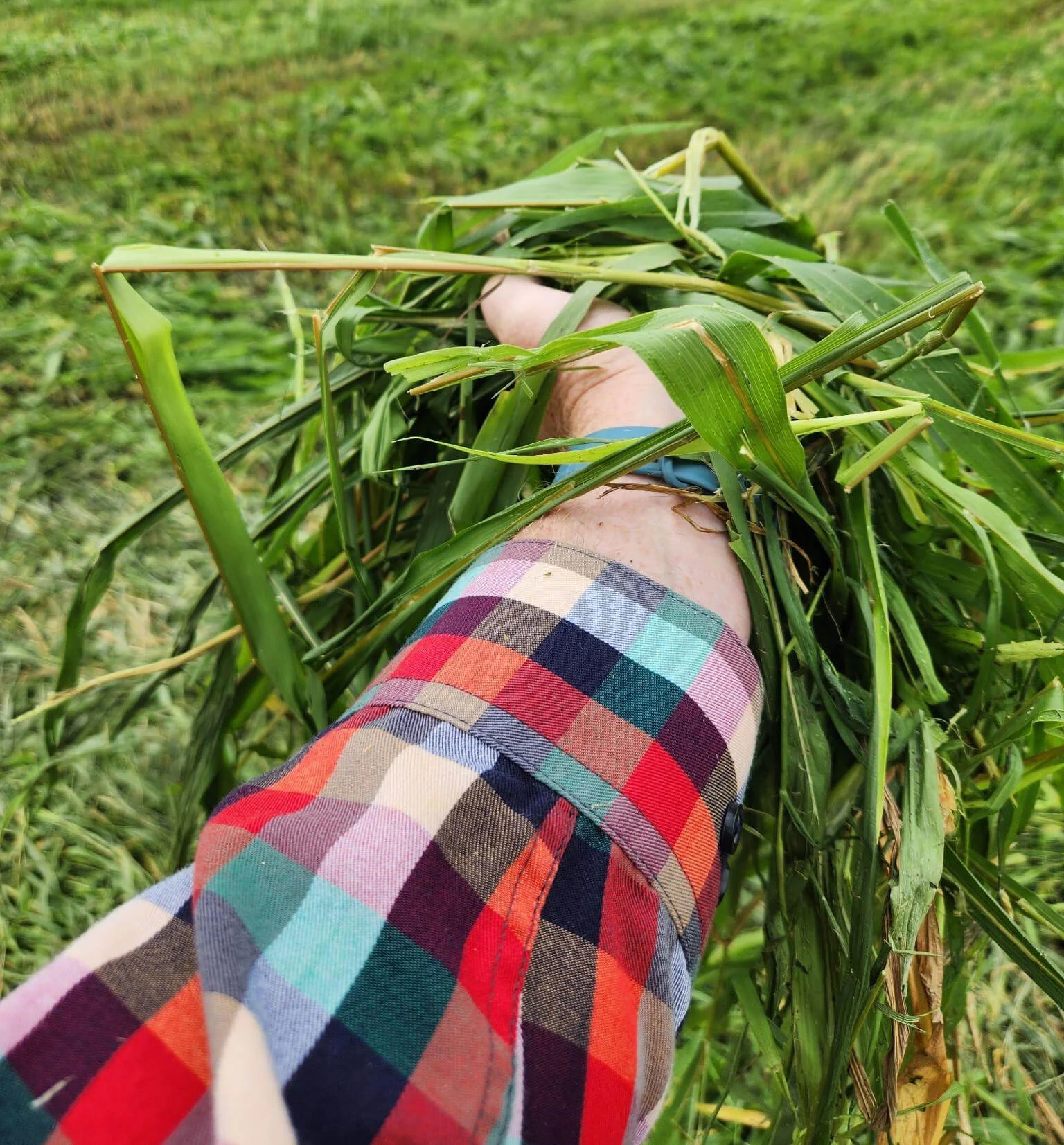
Targeted conditioning treats the plant as two different problems. The stem is hollow, fibrous, and waxy: it needs continuous compression to rupture the cuticle and let moisture out. The leaf is dense, flat, and already permeable: it does not need help drying.
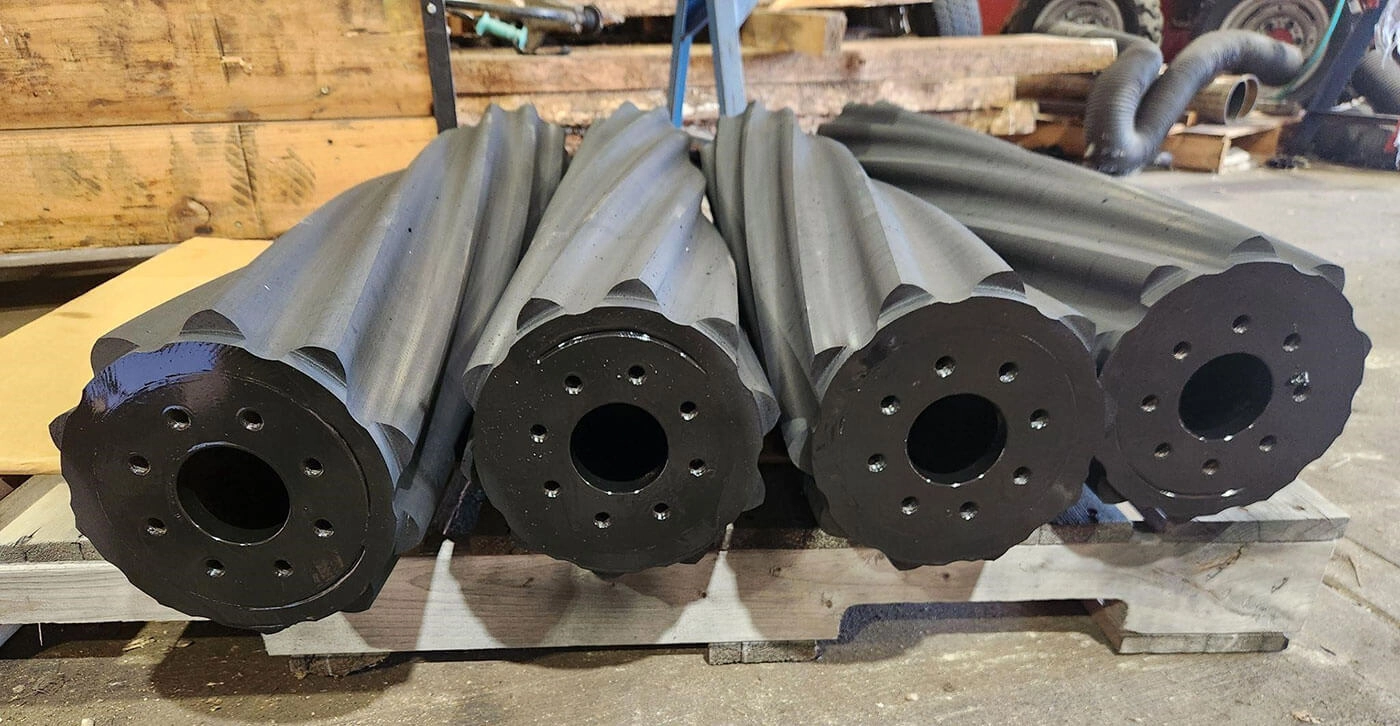
A properly engineered rubber compound makes targeted conditioning possible. The rubber is firm enough to flatten the hollow stem (which collapses under pressure) but compliant enough to yield around the denser, flatter shape of the leaf (which doesn’t). The same pass that crushes the stem along its full length can leave the leaf intact and unbruised.
The rubber compound, the pressure profile, and the lug geometry are all variables in this. A worn rubber profile or a lug pattern that is too aggressive crosses the line from targeted into indiscriminate. The producer feels it in the windrow as bruising and in the bale as shorter, broken leaves.
You can argue with hay test results, but you can’t argue with the ground. There are two field methods that do not require a lab.
The square-frame walk. Build or buy a 2-foot by 2-foot square frame (PVC works fine). Ten minutes after the rake passes, set it down on the bare strip where the windrow used to be. Count the visible whole leaves and the obvious leaf fragments inside the frame. Move the frame three or four times across a representative stretch and average the count. A typical clean operation will see three to six leaves per square foot. A leaf-loss problem shows up as fifteen or twenty.
The cutting-to-cutting RFV check. Send first-cutting hay for testing. Send second-cutting hay from the same field for testing. Compare. If second-cutting RFV drops more than 10 to 15 points and the maturity at cutting was similar, the leaves are escaping somewhere between the cutterbar and the bale. The drop is rarely the variety. It is almost always handling.
The square-frame method is faster and tells you where to look. The RFV check is slower but tells you what it is costing you in dollars per ton.
Three categories of fix, in order of leverage.
Timing. Bale closer to the high end of the moisture window, not the low end. 17 percent is friendlier to leaves than 14 percent. Rake when the leaves are still pliable, ideally at 8 to 10 percent leaf moisture. The right time to rake is often earlier in the day than producers think.
Equipment. Continuous-crush conditioning rolls preserve leaves better than crimp-and-shear systems because they synchronize stem and leaf drying. Wider, narrower-tine rakes outperform aggressive rotary rakes on dry hay. Soft pickup belts on the baler reduce shatter at the threshold.
Technique. Every handling pass costs leaves. The fewer passes, the more leaves arrive at the bale. Skipping a tedding pass on a fast-drying day, or reducing two rake passes to one, often pays for itself in retained protein. The math: every percentage point of retained leaves is roughly half a point of RFV gained.
These three categories compound. A producer who fixes timing, equipment, and technique together can move from Premium to Supreme on the same field in a single season. A producer who fixes only one usually moves half a grade.
Leaf shatter is the most expensive loss in a hay operation because leaves are the most concentrated value. They are also one of the few losses you control directly. Weather is not a variable. Markets are not a variable. The number of times your leaves get touched between the cut and the bale is a variable.
The producers who hit Supreme consistently do not have luckier rakes or kinder weather. They have built a workflow that treats leaves as something you protect on purpose. You can’t grow them bigger. You can decide whether to keep them.
How much is leaf loss actually costing me per ton?
Run the rough math on your own numbers: every percentage point of leaves retained is worth about half a point of RFV, and each grade step (Fair to Good, Good to Premium, Premium to Supreme) typically moves price by $20–$60 a ton depending on your market. An operation losing 20–25 percent of its leaves is often leaving a full grade — sometimes more — on the ground. The cutting-to-cutting RFV check above will put a dollar figure on your specific fields.
Do rubber conditioning rolls really lose fewer leaves than steel or flail systems?
Yes, and the reason is mechanical, not marketing. Steel rolls and flail conditioners apply the same force to leaves and stems, and leaves can’t take it. A continuous-crush rubber roll is firm enough to flatten the hollow stem but yields around the denser leaf, so the stem gets crushed and the leaf stays attached. The added benefit: because the stem dries faster, leaves spend less time over-drying in the field, which reduces shatter at every step that follows.
I already run rubber rolls — why am I still seeing bruised leaves in the windrow?
Two usual suspects. First, roll condition: a worn rubber profile stops yielding around the leaf and starts hitting it — reconditioning restores the profile. Second, tension: rolls set tighter than the crop needs will bruise leaves even with the right rubber. If backing tension off doesn’t fix it, contact the team at 320-334-6128 and talk through your setup.
Leaf retention is one lever in the feed-value equation. These pieces carry the rest of the math:
To talk through the conditioning piece directly, the dealer locator connects you with someone nearby.
The Crusher’s proprietary rubber compound is built for exactly the targeted conditioning this article describes — full-stem crush with minimal leaf loss, on your existing machine with no modifications. Find a dealer near you or get a fast, free quote at 320-334-6128.

No matter where you are, there’s a Crusher near you.